
Rice brown spot
Causal organism
Bipolaris oryzae
Symptoms
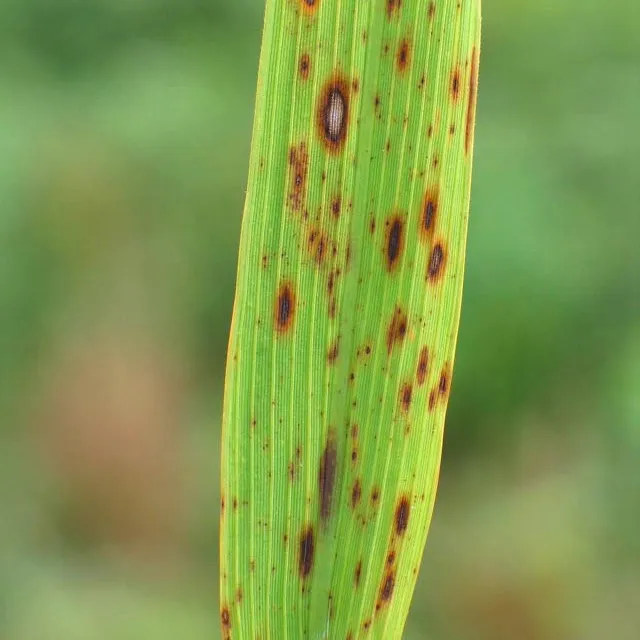
Nursery symptoms: Infected seeds may show brown to dark-brown discoloration. The degree of discoloration varies, and seed appearance alone is not sufficient to confirm infection. Seed infected by the pathogen may produce weak seedlings or fail to germinate normally. Infected seedlings may develop brown lesions on the leaves and become weak; severe infection can lead to drying and death of young seedlings. Where infected seeds or seedlings are distributed unevenly, the crop may emerge or establish irregularly. Vegetative and flowering stage: The first visible symptoms are usually small, circular to oval, brown spots on the leaf blade. Lesions may begin as tiny brown or reddish-brown specks. As they develop, the spots become more clearly defined and may enlarge into oval or elliptical lesions. The centre of a mature lesion is often lighter brown, greyish-brown, or tan, while the margin remains darker brown. Some lesions develop a yellowish area around the brown centre. Individual lesions may remain separate when infection is limited. The number and size of lesions can increase as the disease progresses. Closely spaced lesions may merge, producing larger irregular areas of dead tissue. With severe infection, extensive spotting and tissue death reduce the healthy green leaf area. Leaves may progressively dry, particularly when infection is heavy. Severely affected plants may look yellowish-brown or scorched because of numerous lesions and drying leaves. Grain filling stage: Infected grains may develop brown or dark-brown spots or patches. Brown lesions or discoloration may occur on the glumes or outer grain coverings. Infected and uninfected grains may differ in colour and appearance within the same panicle or harvested lot. Severe disease affecting the crop can be associated with poorly filled or shrivelled grains, although this symptom is not specific to brown spot. Grain infection and discoloration can reduce the market quality of harvested rice. When infected grains are retained for sowing, seed health and subsequent seedling establishment may be affected. Key identification: Predominantly round or oval brown spots